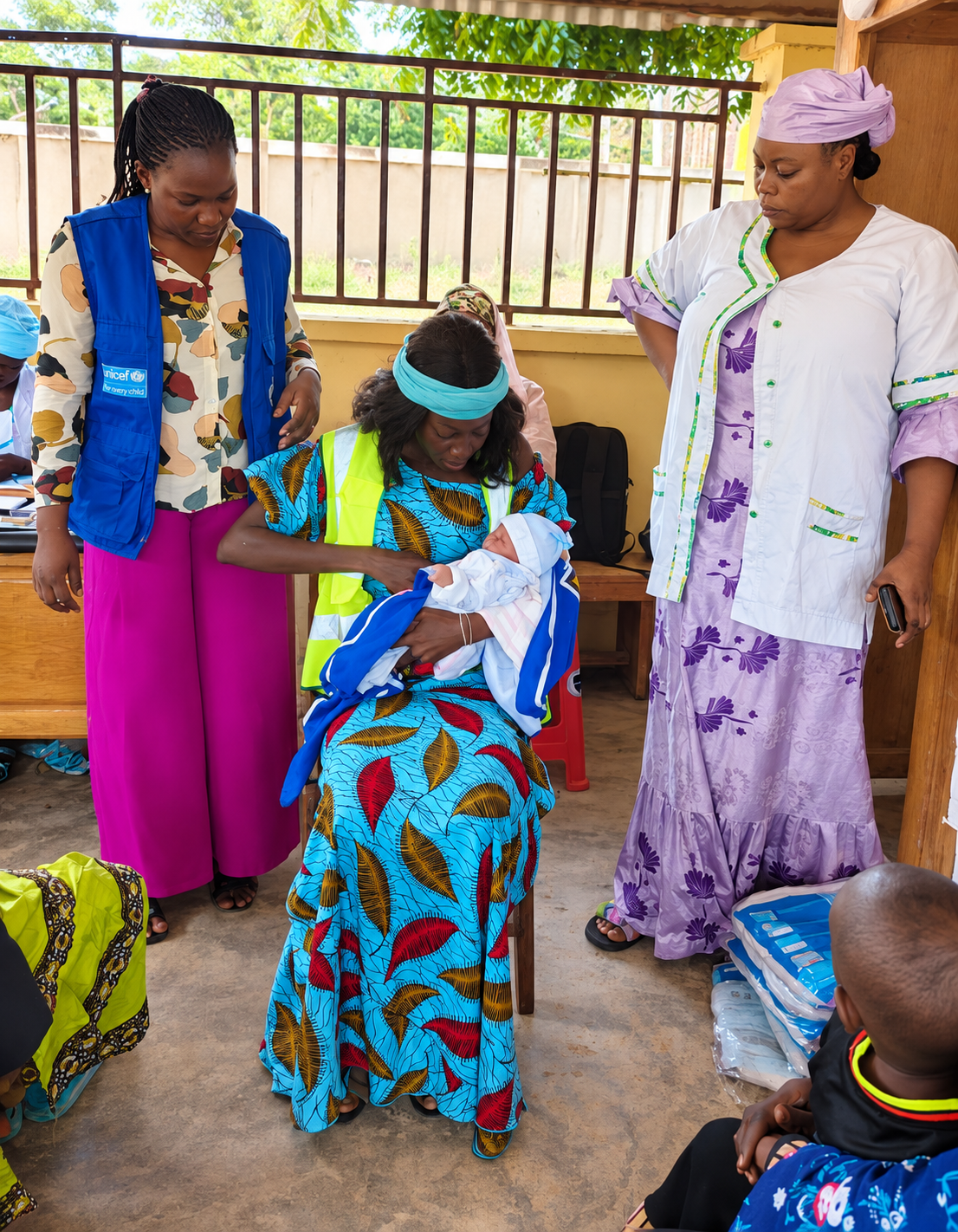
The Scale of the Crisis: What the Numbers Tell Us
Child malnutrition in Cameroon's Northwest Region is not simply a hunger problem — it is a compounding emergency shaped by displacement, disrupted livelihoods, collapsed health infrastructure and persistent insecurity. According to data from UNICEF and the Cameroon Ministry of Public Health, acute malnutrition rates among children under five in conflict-affected divisions of the Northwest have consistently exceeded emergency thresholds in recent years, with global acute malnutrition (GAM) rates surpassing 15 per cent in the most vulnerable communities.
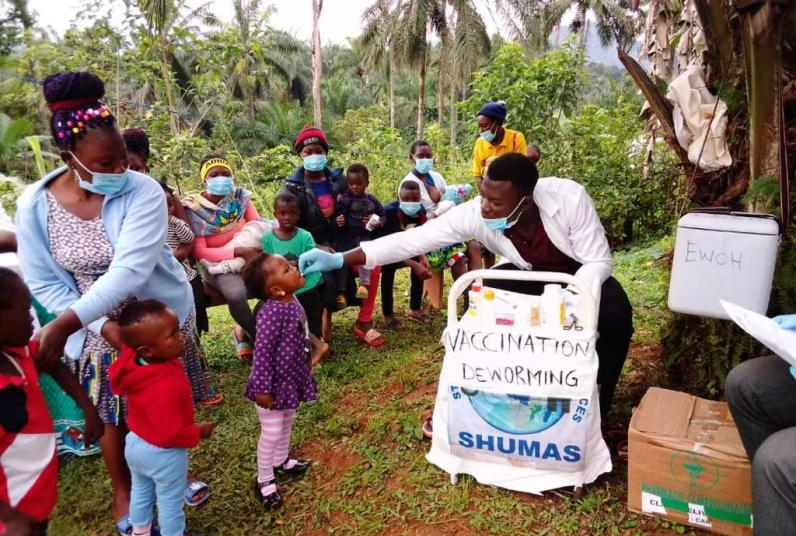
For a child malnutrition Cameroon NGO like SHUMAS, which operates across all 31 divisions of the country, these figures are not abstractions — they represent children seen in community health posts, mothers encountered during food security assessments, and families whose ability to feed themselves has been shattered by years of crisis. Since its founding in 1993, SHUMAS has built a frontline presence in the Northwest that few organisations can match, and that proximity to affected communities shapes every aspect of how nutrition programming is designed and delivered.
Why the Northwest Region Faces a Disproportionate Burden
Understanding why child malnutrition in the Northwest Region is so acute requires understanding the particular character of the Anglophone crisis that began in 2016. Ghost town orders, school closures, market disruptions and population displacement have systematically undermined the food systems that rural families depend upon. Farmers have been unable to tend fields. Markets have closed. Supply chains for therapeutic foods and micronutrient supplements have been interrupted. The result is a situation in which even families who were food-secure before the crisis have found themselves unable to meet the nutritional needs of their children.
Complicating matters further is the collapse of routine health services across much of the region. Growth monitoring — the essential first line of defence against malnutrition — has been disrupted in dozens of health facilities. Community health workers have been displaced. The integrated management of acute malnutrition (IMAM) protocol, which depends on a functioning referral system from community screening through to therapeutic feeding centres, has been severely strained. In this environment, the role of a child malnutrition Cameroon NGO becomes not merely supplementary but absolutely central to child survival.
SHUMAS's Integrated Approach to Nutrition Intervention
What distinguishes SHUMAS's approach to malnutrition from simpler food distribution models is its insistence on integration. A child who receives ready-to-use therapeutic food (RUTF) but whose mother has no income and whose household has no access to clean water will almost certainly relapse into acute malnutrition within weeks. SHUMAS recognised this reality early and built its nutrition programming accordingly.
The organisation's nutrition interventions typically combine several mutually reinforcing elements:
- Active case finding and community screening: Trained community volunteers conduct regular mid-upper arm circumference (MUAC) screening in villages, markets and displacement sites to identify children with acute malnutrition before they reach severe stages.
- Therapeutic and supplementary feeding: Severely acutely malnourished (SAM) children are enrolled in outpatient therapeutic programmes (OTP), whilst those with moderate acute malnutrition (MAM) receive targeted supplementary feeding supported by partnerships with WFP.
- Infant and young child feeding (IYCF) counselling: Mothers and caregivers receive structured support on breastfeeding, complementary feeding and hygiene practices that protect nutritional status.
- Kitchen gardening and livelihood support: Households are provided with seeds, tools and training to establish small vegetable gardens, ensuring a sustainable supply of micronutrient-rich foods.
- WASH integration: Clean water access and hygiene promotion are embedded in every nutrition programme, recognising that diarrhoeal disease is a primary driver of malnutrition in young children.
This model reflects a decade and a half of hard-won learning about what actually works in crisis settings in Cameroon. It is not a model that can be imported wholesale from elsewhere — it has been shaped by the specific cultural, geographic and political realities of the Northwest Region.
Partnerships That Multiply Impact
No single child malnutrition Cameroon NGO can address a crisis of this scale alone. SHUMAS's effectiveness is substantially amplified by its partnerships with UN agencies and international NGOs that provide technical guidance, supply chains and funding that local organisations cannot generate independently.
The relationship with the World Food Programme (WFP) has been particularly significant. Through WFP's targeted supplementary feeding programme, SHUMAS has been able to reach thousands of moderately acutely malnourished children and pregnant and lactating women with specialised nutritious foods. WFP's logistics infrastructure also enables SHUMAS to receive and distribute supplies in areas where commercial supply chains have broken down entirely.
UNICEF's support has been equally vital, particularly in the area of severe acute malnutrition. UNICEF procures and pre-positions RUTF supplies and supports the training of SHUMAS health and nutrition staff in the IMAM protocol. The International Rescue Committee (IRC), UNFPA and IOM have each contributed to aspects of SHUMAS's protection-nutrition nexus work — recognising that malnutrition is often both a cause and a consequence of gender-based violence, displacement and reproductive health emergencies.
These partnerships are not passive funding relationships. They involve joint planning, shared data systems, coordinated community outreach and regular joint monitoring. For communities in the Northwest Region, the practical result is a more coherent and comprehensive response than any single agency could deliver.
The Evidence: What Integrated Nutrition Programming Achieves
The question of what works in nutrition programming in conflict settings is one that the global humanitarian community has spent considerable energy investigating. The evidence strongly supports the kind of integrated, community-based approach that SHUMAS has developed. Studies consistently show that outpatient therapeutic programmes achieve cure rates of over 75 per cent when combined with household-level support — a figure that drops dramatically when therapeutic feeding is provided in isolation.
SHUMAS's own programme data reflects these findings. Recovery rates among SAM children enrolled in OTP sites supported by SHUMAS have consistently met or exceeded SPHERE standards. Default rates — a key indicator of programme quality — have remained low even in highly insecure areas, a direct result of the community volunteer networks that maintain contact with enrolled children and their families.
Critically, the integration of kitchen gardening and livelihood support has contributed to reduced relapse rates among children who have successfully completed treatment for acute malnutrition. By addressing the household food security dimension of malnutrition alongside the clinical dimension, SHUMAS programmes achieve more durable outcomes — outcomes that persist even after the programme cycle ends.
What Still Needs to Be Done
Despite this progress, the reality is that funding for child malnutrition programming in Cameroon's Northwest Region remains chronically insufficient relative to the scale of need. The Northwest and Southwest regions continue to be systematically underfunded compared to better-known crises elsewhere in the world. Humanitarian response plans for Cameroon are typically funded at well below 50 per cent of their targets.
This funding gap has direct consequences. Children who could be identified and treated through community screening are missed. Mothers who could receive IYCF counselling do not. Kitchen garden programmes that could prevent relapse are not scaled. The machinery of effective nutrition response exists — what is lacking is the consistent, predictable funding to keep it running.
SHUMAS is currently seeking to expand its nutrition programming in Bui, Mezam, Momo and Boyo divisions — areas where acute malnutrition rates remain elevated and where coverage of therapeutic feeding services is inadequate. Achieving this expansion requires both institutional partnerships and individual donor support.
How You Can Help Fight Child Malnutrition in Cameroon
If you have read this far, you understand something important: child malnutrition in Cameroon's Northwest Region is not inevitable. It is the product of a crisis that has disrupted food systems, health services and livelihoods — and it is addressable through proven, community-led interventions. SHUMAS has the relationships, the expertise and the access to deliver those interventions. What makes the difference is sustained support.
There are several ways to make that support concrete:
- Donate online: A contribution of any size to SHUMAS's nutrition programmes directly supports community screening, therapeutic feeding and household food security interventions for children in the Northwest Region. Every donation is used with accountability and transparency.
- Partner with us: Institutional donors, foundations and corporate partners seeking to fund credible, locally-led nutrition programming in Cameroon are encouraged to contact SHUMAS directly to discuss programme design and co-funding opportunities.
- Spread the word: Awareness of the crisis in Northwest Cameroon remains low. Sharing this article and SHUMAS's work with your networks contributes to the visibility that ultimately drives funding and political attention.
Visit shumas.org/donate to make a donation or shumas.org/contact to explore a partnership. Together, we can ensure that no child in Cameroon's Northwest Region is lost to a preventable, treatable condition.