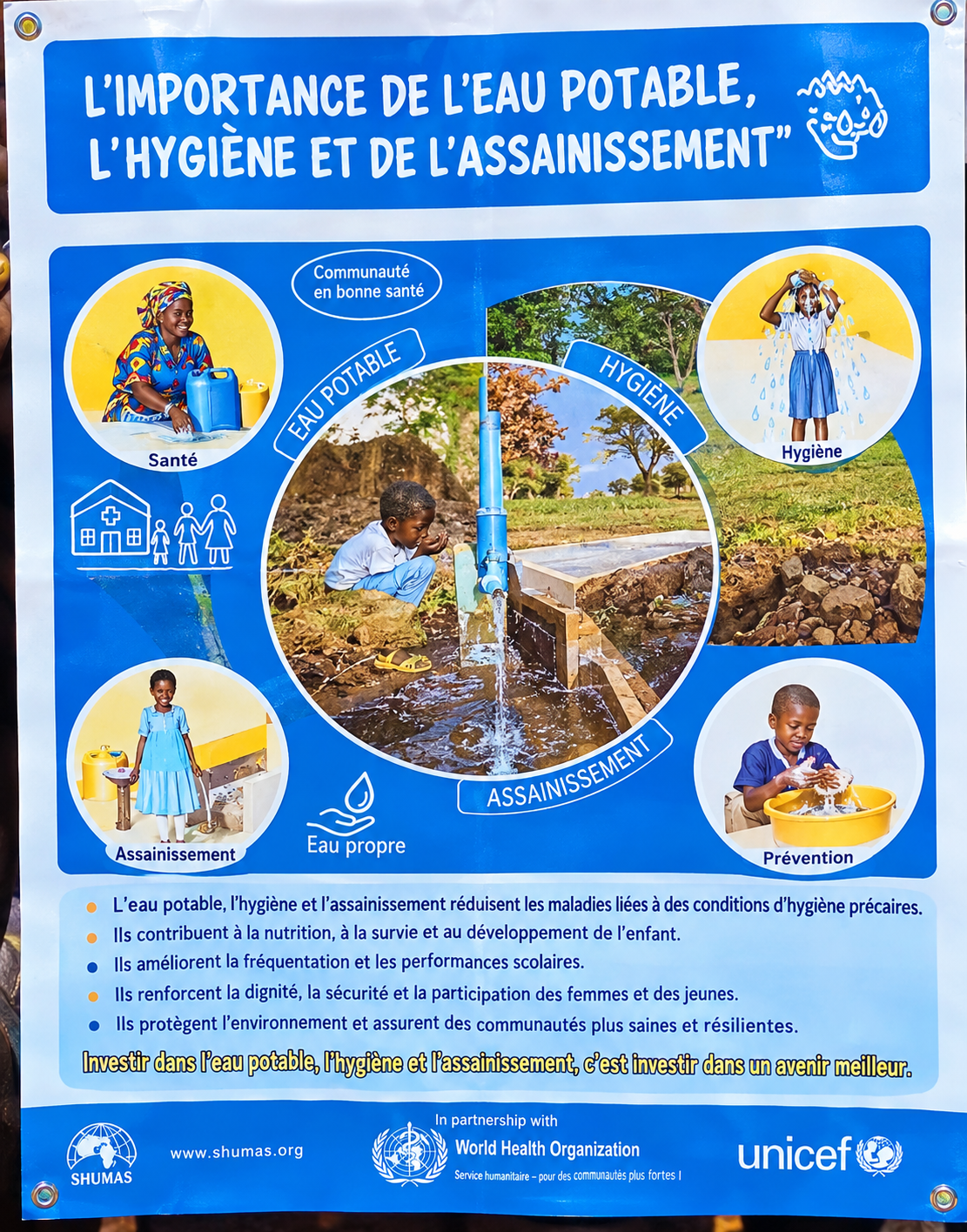

Among the children identified with severe acute malnutrition, one child presenting with complications was referred to the Intensive Nutritional Treatment Centre (CNTI) at the Kousséri Regional Annex Hospital for appropriate medical and nutritional care. The screening activities are continuing at the Adigué 1 and 2 sites, with the support of the Chief of the Hilé Haoussa Health Centre, CHWs and the SHUMAS team, bringing essential Health and Nutrition services closer to displaced families and strengthening early identification and referral of vulnerable children. The response goes beyond nutrition screening. Health and nutrition awareness sessions are also being conducted, including Cholera Prevention, against a concerning epidemiological backdrop in the Kousséri and Waza Health Districts. The teams are also identifying and registering Pregnant Women and supporting Catch-Up Vaccination for children who have missed routine immunisations, contributing to a broader Multisectoral Response to the needs of displaced and vulnerable communities. In a context of population displacement following violence and abuses attributed to Boko Haram, Community Mobilisation remains central to ensuring that vulnerable families are reached with life-saving information and services. Through this intervention, SHUMAS continues to work alongside health authorities, Community Health Workers and affected communities to strengthen access to Nutrition, Health and Protection services. SHUMAS , Acting closer to communities to protect the most vulnerable.
